Designing Ford’s Licensing Program
Ford Motor Company
Design Lead (CAA)
Ford’s licensing program sits in a hard space. The brand is iconic, the asset library is massive, and the stakes are high. Without a clear system, licensing quickly becomes logo slap.
My job was to study Ford’s brand and sub-brand codes up close, then translate that identity into practical guidance partners could actually use. That meant traveling to Dearborn to understand the products and differences firsthand, including F-Series, Bronco, Mustang, and Lincoln. I then turned that understanding into a licensing toolkit that protected the brand while inspiring better product design decisions across categories.
Scope:
Led the licensing design system, asset organization, sub brand translation, deck strategy, partner guidance, and legal coordination.
Team:
Joel De La Rosa · Jon Morgan
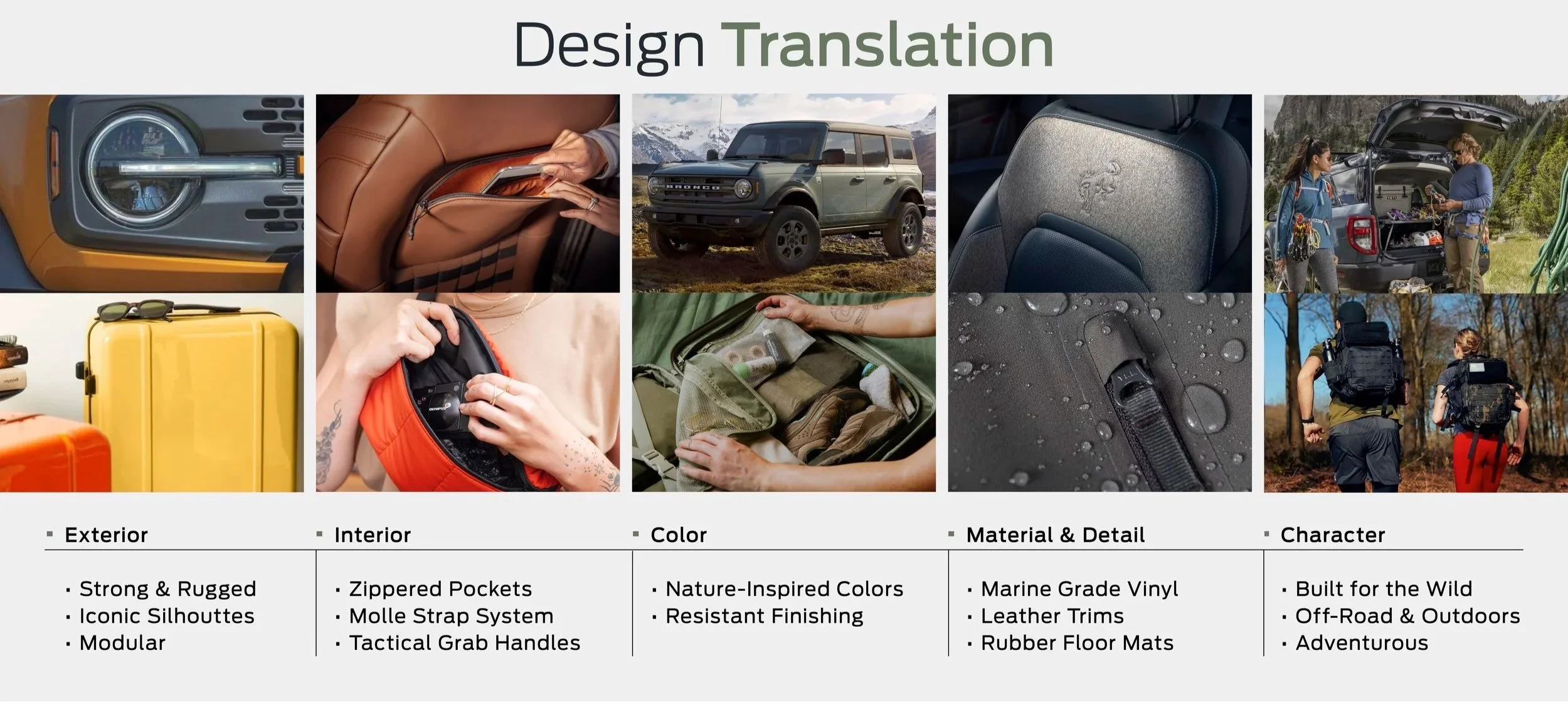
Ford Bronco Luggage Design Translation
Strategy:
We treated licensing like product design, not brand decoration. The goal was to help partners make things that felt like they belonged to Ford. So instead of starting with “what can we put the logo on,” we started with “what does this sub-brand stand for, and what should it feel like when it shows up in a new category?” That shift changed the work from approvals and policing into a creative system that could guide better outcomes.
The work began with brand understanding. Each Ford sub-brand has a different personality and a different customer relationship, and that difference needs to survive the jump into categories like apparel, kids products, grooming, food and beverage, books, toys, and footwear. The decks were built to give partners clear inspiration and constraints at the same time: enough freedom to create, enough structure to stay on-brand, and enough taste direction to avoid the default, lowest-effort solution.
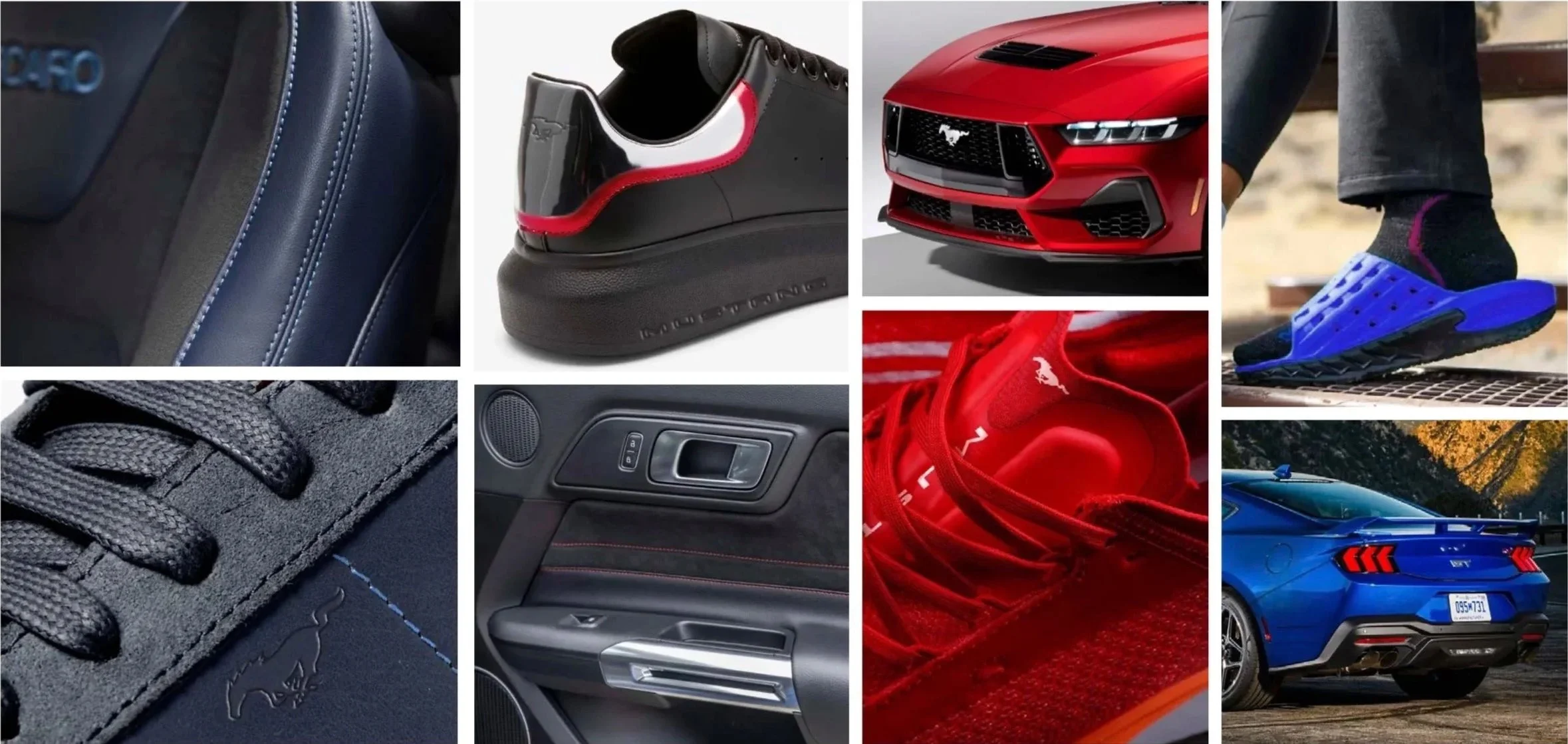
Mustang Footwear Translation
The system had two layers: how we inspire good work, and how we protect the brand at scale. On the inspiration side, we created category-specific decks that translated each sub-brand into clear visual direction. What to borrow from the vehicle design language, which materials and details felt authentic, what kinds of graphics and silhouettes made sense, and where we needed to keep it focused so it didn’t turn into noise. The decks were meant to be a shared starting point that raised the quality of what partners produced.
On the protection side, we conducted a full asset audit and organized Ford’s library so it could be used correctly and consistently. That meant streamlining files, creating usage guidance that reduced ambiguity, and collaborating closely with legal to make sure each partnership had the right assets for the rights they actually secured. In practice, it became one cohesive workflow: understand the sub-brand, translate it into a category lens, guide partners toward intentional design, and ensure every execution stayed clean, approved, and legally correct.

Mustang GTD Slide
This work made licensing feel intentional. It gave Ford a way to scale into new categories without diluting what each sub-brand stands for, and it gave partners a clearer creative path than “add the logo and ship it.” The outcome wasn’t just better-looking decks, it was a more controlled, repeatable way for a heritage brand to expand while staying recognizable.