Building from Brand to Product
Idioma Studio
Creative Director / Founder
Idioma started the way many early brands do. We thought great product and great imagery would be enough. And visually, the work was strong. But we were missing the deeper issue. Being cool is not what makes a brand grow. Belonging is. So we shifted the strategy and chose to build for a specific community first: Dominicans. From there, we shaped the brand to reach a wider Latino audience without losing its perspective.
Once we made that shift, everything became clearer. The brand stopped feeling generically elevated and started feeling culturally specific. The product stopped being just a handbag and became a symbol. For people from the culture, it felt instantly recognizable. For people outside of it, it created curiosity.
Scope:
Brand world direction, audience definition, concept-to-product translation, identity and campaign direction, product system logic, partner sourcing, creative governance.
Team:
Joel De La Rosa · Nabila Brache
Behind The Scenes - Under The Same Sun
Strategy
We treated Idioma like a culture brand, not just a fashion brand. The goal wasn’t “Latin inspired” as a vibe. It was Dominican culture as the foundation. That meant choosing a reference that’s real, everyday, and instantly legible inside the community. We landed on the plantain, because it’s more than food in the DR. It’s a cultural marker. You hear it in the jokes, you see it in celebrations, and it’s part of how Dominicans recognize each other. And that’s what we wanted: a brand code you don’t have to explain.
The strategy was simple: take something deeply familiar and translate it into a luxury object with restraint and taste so it feels intentional, not gimmicky. Not a costume, not a souvenir, and not “streetwear culture” dressed up as luxury. A real bag you’d want even if you removed the reference entirely, because the design holds up on its own. The Dominican layer just makes it more specific and more memorable without turning the brand into a loud statement.
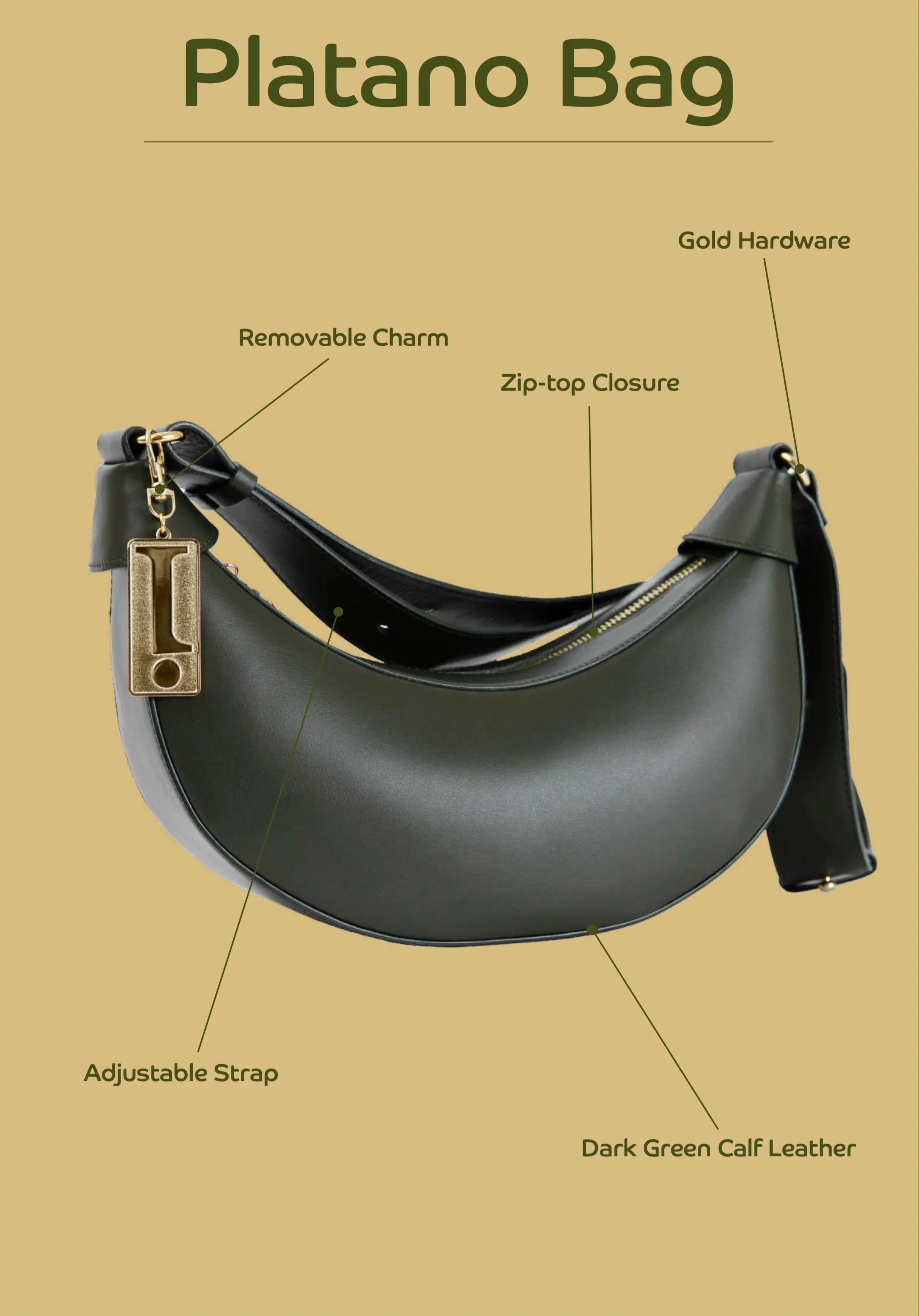
Once the plantain became the anchor, the product system fell into place. The first version was the green plantain: a crossbody that could also convert into a shorter handbag. We wanted it to feel functional, but also sculptural, like a modern object. To make that real, we worked with a tech designer and manufacturer in Italy, pushing the shape, structure, and finish until it reached a true luxury standard.
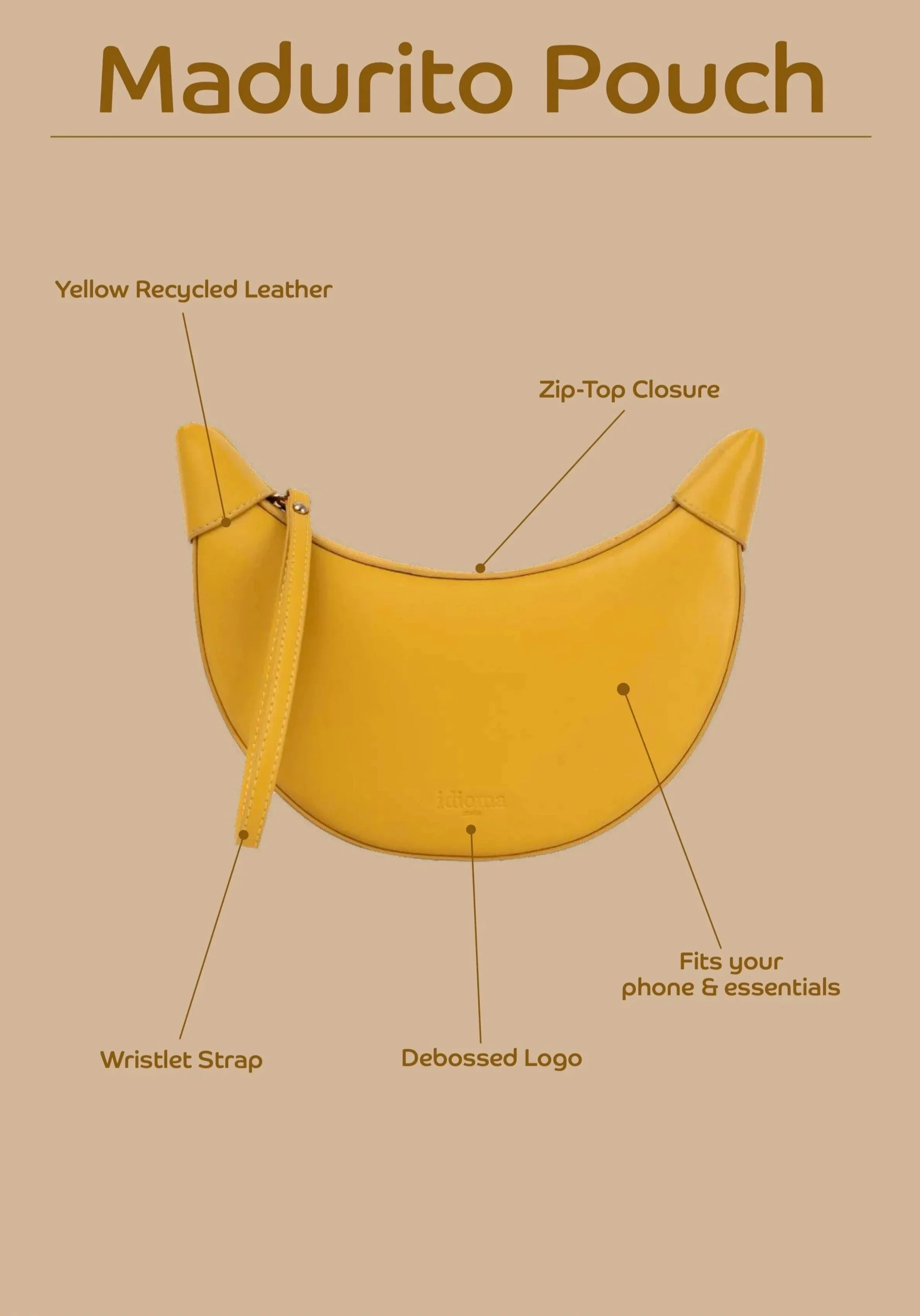
Then we developed the second expression, the “Madurito.” A green plantain changes over time. It turns yellow and sweet. We used that progression as the logic for a smaller piece. The Madurito became a compact clutch with a lower entry price, sized for essentials like a phone and a few small items. Same icon, different form, different use case. It allowed the line to grow without losing the thread.
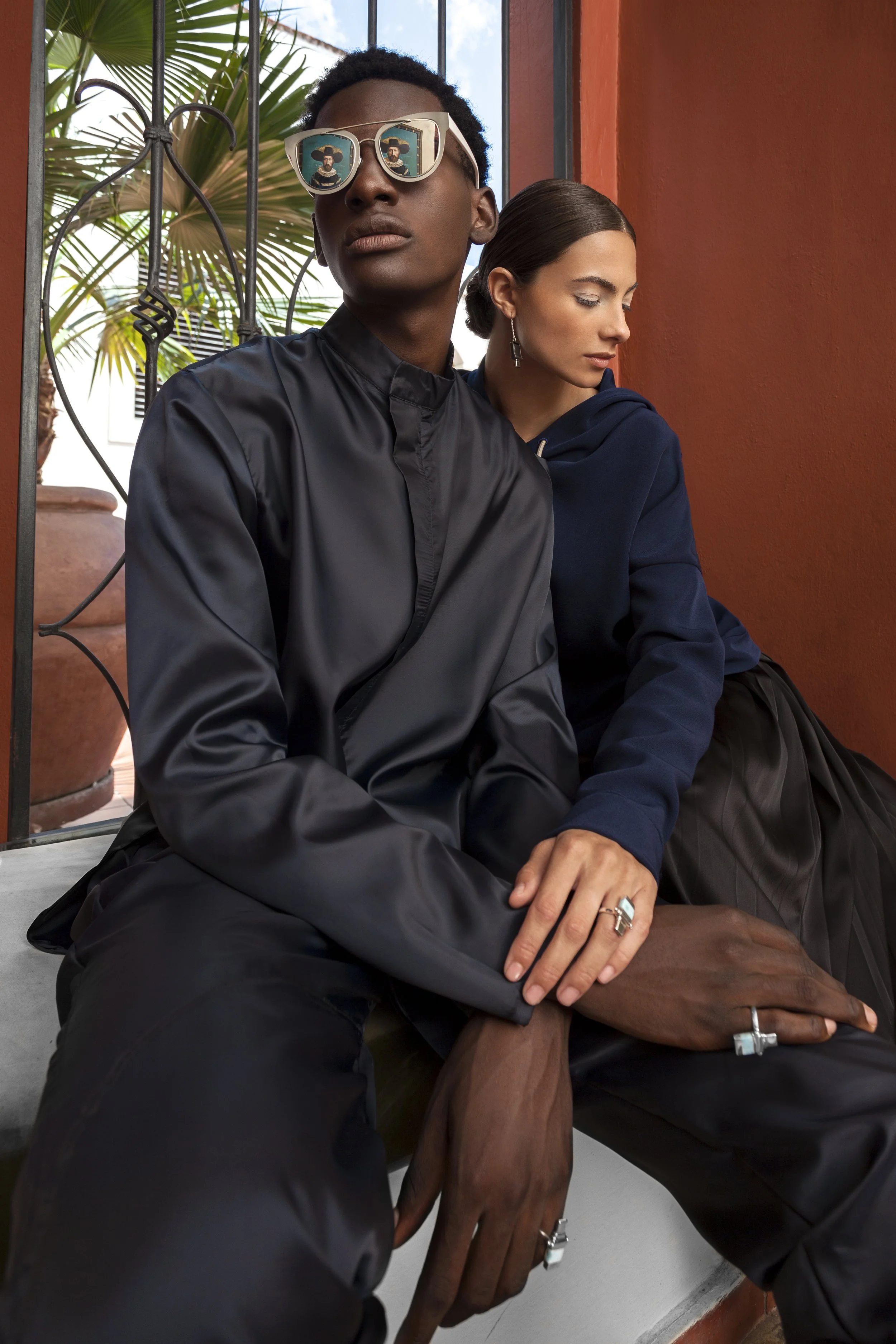
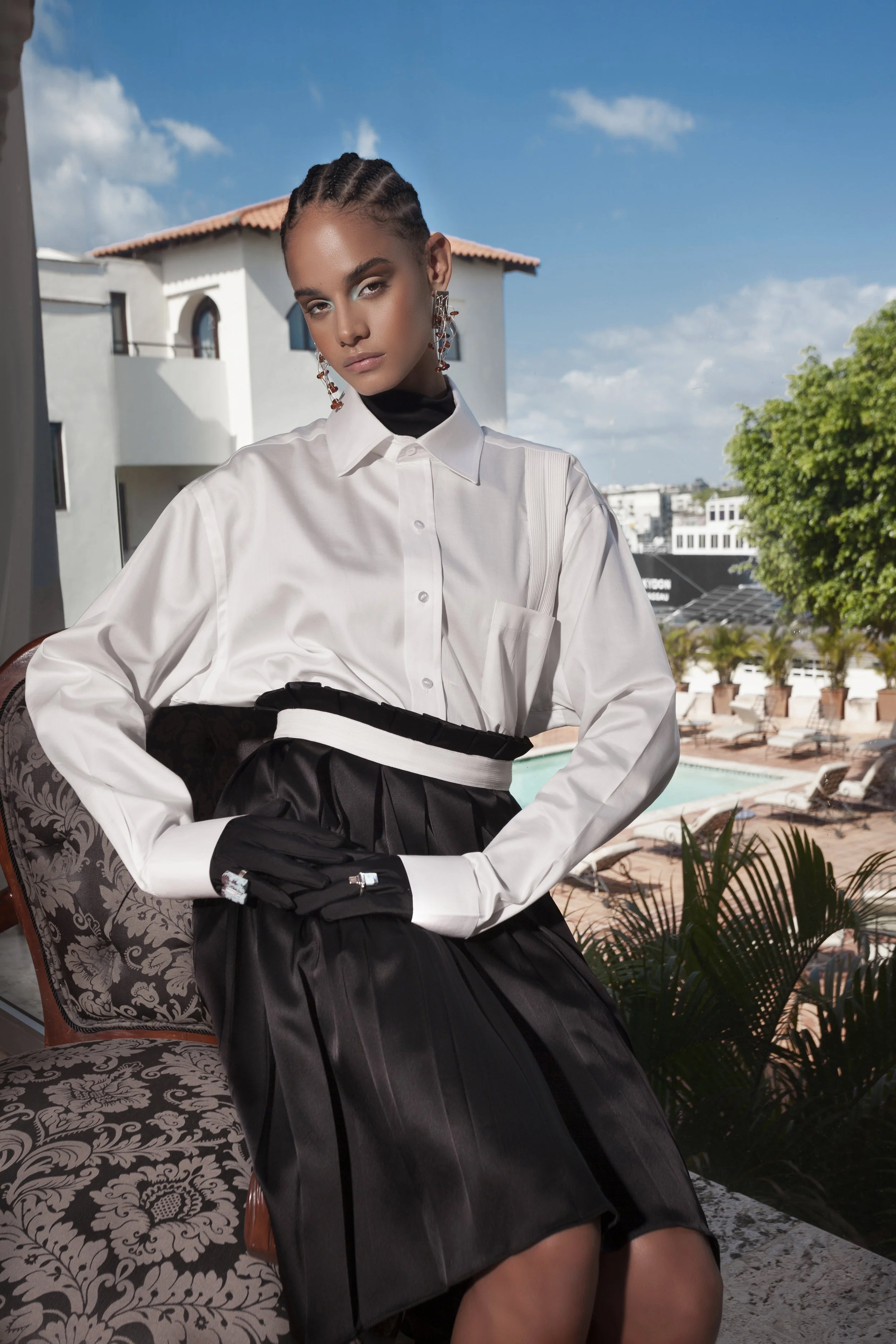
In parallel, we tightened the brand world so the storytelling matched the product. “Under the Same Sun” was an early turning point. It marked the moment we stopped trying to make nice fashion images and started building a world with a clear point of view. We shot in Santo Domingo at Hotel Hodelpa Nicolás de Ovando and used the setting and lifestyle as part of the language: Latin, elevated, specific, and calm. And we didn’t just rely on instinct. We brought in a market consultant to pressure test the audience and make sure the positioning was real and reachable, so the brand was built not only on taste, but also on focus and actual demand.